The best influencer marketplaces for B2B brands in 2026, compared on creator database size
Creator budgets are still rising. Influencer Marketing Hub's Influencer Marketing Benchmark Report 2026, based on more than 600 respondents, found that 87.49% of brands expect their influencer marketing budget to increase this year. For a B2B brand, the harder question is where to find creators whose audience includes the people who sign purchase orders.
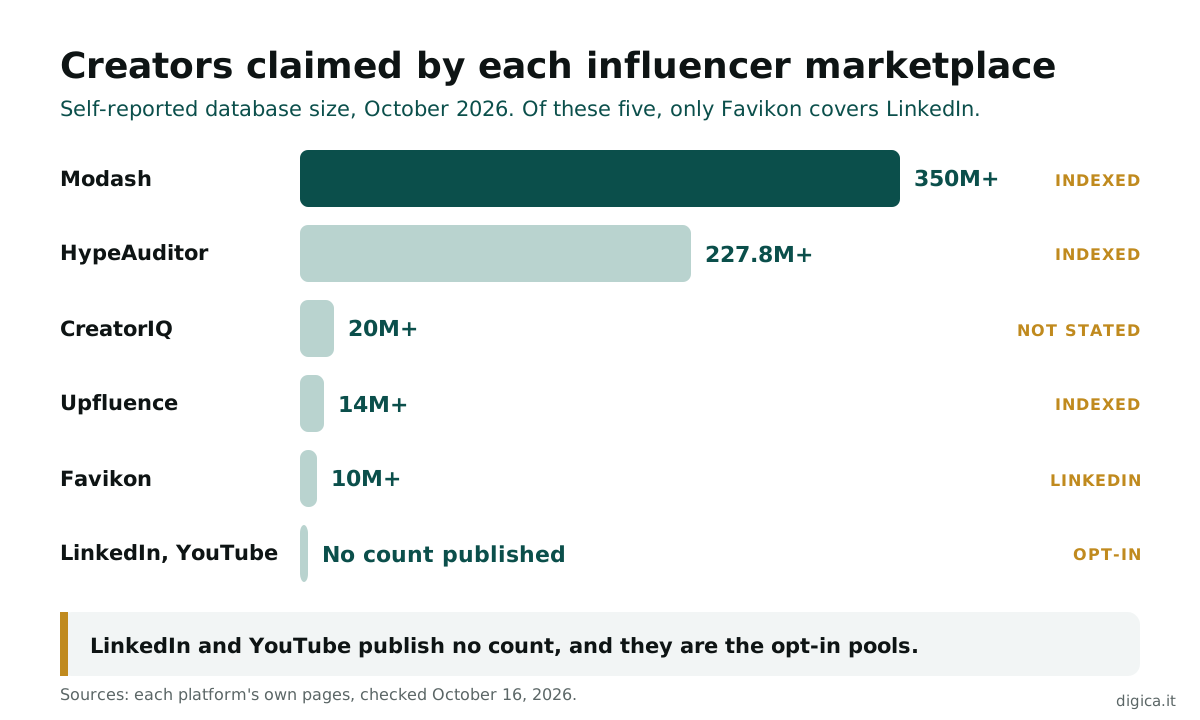
Every influencer marketplace answers that with a database number. One claims 350 million creators, another 227.8 million, another 10 million. The numbers are real, but they count different things. Most count every public profile above a follower threshold, whether or not that person has ever worked with a brand. A few count only creators who have opted in. And the network a B2B buyer cares most about, LinkedIn, is missing from most of the big databases.
This guide compares seven influencer marketplaces head to head on creator database size: how many creators each claims, how a creator gets into the database, which networks are covered and what that means for a B2B shortlist. Figures come from each platform's own pages and announcements, checked on October 16, 2026. It is the supply lens we use when we help creator and influencer marketplaces grow.
Quick Navigation
- Seven influencer marketplaces head to head
- Modash: the largest indexed database
- HypeAuditor: 227.8 million profiles and fraud scoring
- Upfluence: a smaller index with more networks
- CreatorIQ: 20 million creators for enterprise programs
- Favikon: the LinkedIn specialist
- LinkedIn Creator Marketplace: small, opt-in and native
- YouTube Creator Partnerships: every partner creator by default
- Indexed database or opt-in marketplace
- Where creator search goes wrong for B2B brands
- How to choose by budget and channel
- One figure for the budget meeting
- FAQ
- Related Articles
Seven influencer marketplaces head to head
The short answer: Modash has the largest database, HypeAuditor the largest with fraud scoring built in, and Favikon the deepest LinkedIn coverage. For B2B brands, the native LinkedIn and YouTube programs matter more than their missing database counts suggest.
Seven influencer marketplaces compared on creator database size, how creators get in, network coverage, cost and risk
| Platform | Creators claimed | How creators get in | LinkedIn coverage | Cost signal | Main risk for a B2B brand | Best for |
|---|---|---|---|---|---|---|
| Modash | 350M+ | Indexed: every public Instagram, TikTok and YouTube profile over 1K followers | No | From $199 a month, 14-day free trial | Most profiles have never agreed to work with brands | Large consumer-style searches on three networks |
| HypeAuditor | 227.8M+ | Indexed, about 15,000 added a day | No | Demo-led, free tools to start | Strong on Instagram and TikTok, silent on LinkedIn | Vetting creators for fake followers |
| Upfluence | 14M+ (12M+ on its homepage) | Indexed | No | No price on the pages we read | Two different database figures on its own site | Brands that also need Twitch, Pinterest or X |
| CreatorIQ | 20M+ | Not stated | No | Pricing on request | Built for large programs, not a first test | Enterprise programs with many brands and agencies |
| Favikon | 10M+ across 9 networks | Indexed from public data, plus manual adds | Yes, its deepest network | Free plan, paid tiers above it | No audience demographics for LinkedIn profiles | B2B brands that need LinkedIn creators |
| LinkedIn Creator Marketplace | Not published | Invite-only, creators opt in | Native | Alpha access only | North America and English only for now | Reaching LinkedIn creators on LinkedIn itself |
| YouTube Creator Partnerships | Not published | Eligible partner creators, on by default | No | No minimum spend since June 2026 | Audience filters skip creators who share no insights | B2B video sponsorships run from Google Ads |
Read the "how creators get in" column before the database size. An indexed database tells you who exists. An opt-in marketplace tells you who is available. A B2B campaign needs both, and very few platforms give you both in one place.
Modash: the largest indexed database
Modash claims the biggest database in this comparison: 350 million+ creators, which it defines as every public Instagram, TikTok and YouTube profile with more than 1,000 followers. That definition is the point. Nobody signs up to be in Modash; if a profile is public and passes the threshold, it is searchable.
Modash was founded in 2018 in Tallinn, Estonia, and says it has almost 100 people in more than 20 countries, with customer-facing teams in Toronto. It says more than 2,700 companies use it. Pricing starts at $199 a month, with a 14-day free trial and no card required, which makes it one of the few platforms here with a public entry price.
For a B2B brand, the size is both the strength and the trap. A search for creators who talk about cybersecurity or supply chains will return real people, filtered by audience and engagement. But Modash does not cover LinkedIn, so the creators most B2B buyers actually follow for work are missing, and a match in the database still needs a cold outreach that the creator may ignore.
The verdict: the largest database for Instagram, TikTok and YouTube discovery, and the cheapest way to start. Pair it with a LinkedIn source before you call it a B2B shortlist.
HypeAuditor: 227.8 million profiles and fraud scoring
HypeAuditor says its discovery tool covers 227.8 million+ creator profiles and adds about 15,000 new influencers a day. It covers Instagram, TikTok, YouTube, Twitch and X. Founded in 2017, it is headquartered in Indianapolis with an office in Limassol, Cyprus, and says it has 140 employees in 24 countries.
Running a creator marketplace and losing brands at the search step?
In 30 minutes we look at how brands find creators on your platform, and where the shortlist stops turning into booked campaigns.
The company built its name on audience quality checks, flagging creators whose followers look bought or inactive. That matters more in 2026 than it did a few years ago, because regulators now treat fake social proof as a legal risk, not just a wasted budget line. More on that below.
Its pricing page leads with a demo request and free tools rather than a list price. For a brand that already knows which creators it wants and mainly needs to check them, that is a reasonable trade.
The verdict: the best choice for vetting creators before you pay them. Like Modash, it says nothing about LinkedIn, so B2B teams will use it as a checker more than a finder.
Upfluence: a smaller index with more networks
Upfluence's influencer search page claims 14 million+ creators, while its homepage says 12 million+. Either way, the index is far smaller than Modash or HypeAuditor, but it reaches more networks: Instagram, TikTok, YouTube, Twitch, Pinterest and X. Filters include niche, platform, audience size, engagement rate and audience location and language down to city level.
Upfluence was founded in 2013 and lists offices in New York, Los Angeles, Lyon and Mexico City. Its contact page does not name a headquarters, and the pricing figures were not visible on the pages we read.
Two different database numbers on one website is a small thing, but it is the kind of detail a procurement lead notices. For a buyer, it is a reminder that every figure in this category is self-reported and changes with the page you land on.
The verdict: a good fit for brands that need reach on Twitch, Pinterest or X as well as the big three. Ask which database figure applies to your plan before you sign.
CreatorIQ: 20 million creators for enterprise programs
CreatorIQ says it has 20 million+ creators in its database and lets brands search up to 12 months of their content, refreshed daily. Founded in 2014 and based in Los Angeles, it says it has 325+ employees. It bought Tribe Dynamics in 2021 and was named a Leader in the IDC MarketScape for 2025 to 2026.
Its site does not say whether creators opt in or are indexed, and LinkedIn is not among the integrations it lists. In 2026 it launched "Applied Creator Intelligence" and a measurement integration with Sprinklr. Pricing is on request, through a call with a platform specialist.
CreatorIQ is built for programs that run many campaigns across many brands, agencies and markets. The database is one part of a larger system for briefs, contracts, payments and reporting. That is why it sits in a different budget bracket from Modash.
The verdict: the enterprise choice when creator marketing is already a program with its own team. For a first B2B test, it is more platform than you need.
Favikon: the LinkedIn specialist
Favikon is the only database in this comparison that treats LinkedIn as a core network. It scores 10 million+ creators across nine networks, including LinkedIn, TikTok, Instagram, YouTube and X, and its B2B product page calls LinkedIn its "deepest coverage area, not a bolt-on".
Is your creator marketplace invisible to B2B brands?
A growth audit shows how brands search for creators in your category, on Google and in AI answers, and which pages they never reach.
For a B2B brand, the filters are the draw. Favikon lets you search by job role, treat LinkedIn Top Voices as a niche, find lookalikes and see which brands a creator has already worked with, including competing SaaS tools. Profiles come from public social data, and users can add profiles by hand. One limit is stated plainly: LinkedIn profiles get authenticity scoring but no audience demographics.
Favikon was co-founded in 2020 in Paris and has a free plan with paid tiers above it. Its database is the smallest here, but for B2B it is also the most relevant per profile. Ten million creators who include LinkedIn beat hundreds of millions who do not, when the buyer you want reads LinkedIn at work.
The verdict: the best influencer marketplace for B2B brands that need LinkedIn creators. Expect to judge audience fit yourself, because the demographics are not there.
LinkedIn Creator Marketplace: small, opt-in and native
LinkedIn launched its own Creator Marketplace in June 2026 as an alpha: invite-only, for select brands and creators in North America, with English-language content. Creators opt in through a new Monetization tab on their profile. Deal terms and payments happen off the platform, and LinkedIn has not published a creator count.
It sits inside a wider push into B2B video and creators. In March 2026 LinkedIn added six publishers, including Reuters Japan and TIME, to the 40+ outlets in its BrandLink pre-roll program, opened BrandLink publisher campaigns to self-serve buying for select customers, launched Top Voices 360 sponsorships and began moving creator payouts to Stripe. The same announcement reported its 2026 Global B2B Marketing Outlook, a YouGov survey of 1,299 B2B marketers: 82% of those who work with creators say influencer campaigns are essential for measurable return on investment.
The database here is tiny by design. Every creator in it has chosen to be there, and every one works on the network where B2B buyers spend their working day. That is the opposite trade to Modash.
The verdict: the most relevant source of B2B creators, if you can get in. Until it opens beyond North America and English, treat it as a channel to watch, not a plan.
YouTube Creator Partnerships: every partner creator by default
YouTube takes the other route to opt-in. Creators who are 18 or older, in the YouTube Partner Program, in one of 24 listed countries and free of active strikes are discoverable to brands by default. To leave search and outreach, a creator has to email Google. Sharing detailed channel insights is a separate opt-in.
Since June 2026, Creator Search, Overview and Lists are available to all active Google Ads accounts in YouTube Partner Program countries, and the minimum spend requirements no longer apply. That puts creator search inside a tool many B2B marketing teams already use to buy search and video ads. YouTube does not publish how many creators are searchable.
The catch is in the filters. Audience and performance filters exclude creators who have not opted in to share detailed insights, so the most precise searches return a smaller pool than the default list.
The verdict: the simplest way for a B2B team already on Google Ads to sponsor long-form video. Check how many creators drop out once you turn on audience filters.
Indexed database or opt-in marketplace
Every platform in this guide sits somewhere between two models, and the model tells you more than the database size.
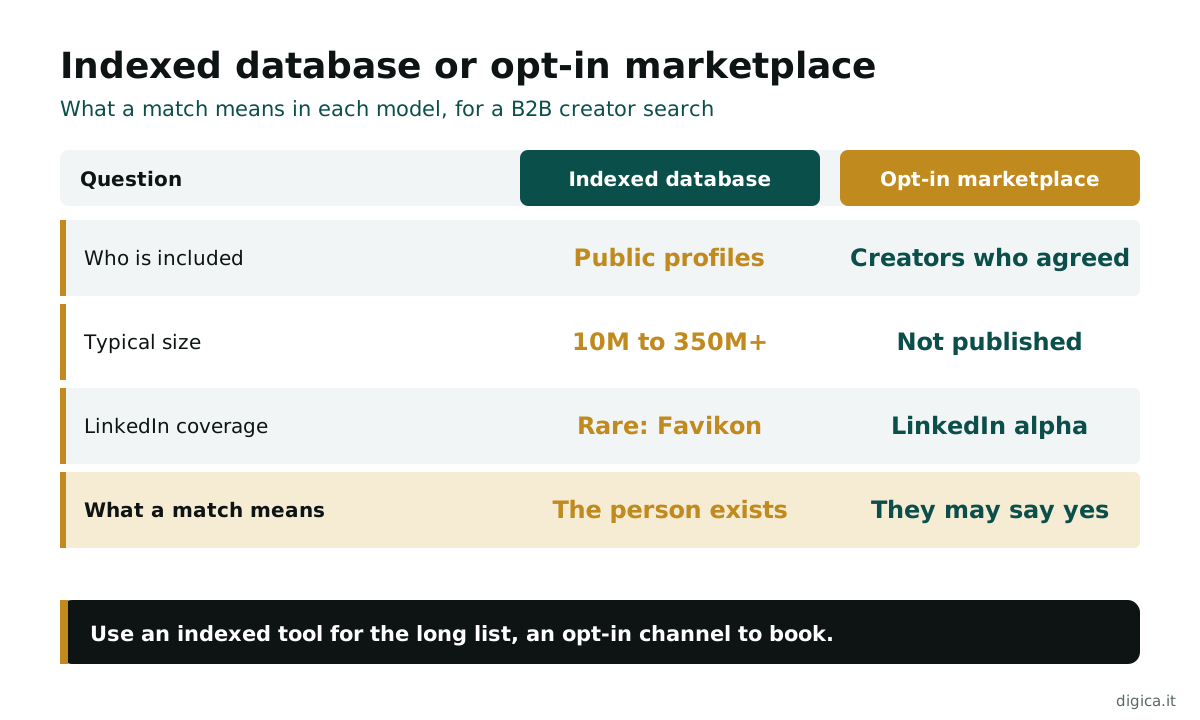
An indexed database (Modash, HypeAuditor, Upfluence, Favikon) scrapes or ingests public profiles above a threshold. It is large, fast to search and rich in audience data, but a match only means the person exists. An opt-in marketplace (LinkedIn Creator Marketplace, and YouTube's partner pool by default) includes creators who have agreed to brand work, so a match means someone may say yes. It is smaller, and on LinkedIn it is still invite-only.
For B2B brands, the gap between the two is wider than in consumer marketing. Consumer creators on Instagram and TikTok expect brand deals. Many of the people B2B buyers follow on LinkedIn are practitioners with day jobs, and some have never been paid for a post. An indexed database will show them; it cannot tell you whether they would accept a sponsorship or whether their employer allows it.
That is why the most useful B2B shortlist often combines one indexed tool for discovery with one opt-in channel for booking. The indexed tool finds the long list. The opt-in channel, or a personal introduction, turns it into creators who say yes.
Where creator search goes wrong for B2B brands
Most B2B creator programs that stall do so at the search step, not the campaign step. These patterns come up again and again.
- Buying the biggest database for the wrong network. A software company buys access to hundreds of millions of Instagram and TikTok profiles, then discovers its buyers follow practitioners on LinkedIn and YouTube. The shortlist looks large and contains almost nobody who reaches a budget holder.
- Treating every match as available. An indexed match is a person, not a partner. Teams send fifty cold messages from a shortlist, get three replies, and decide creator marketing does not work for B2B, when the real problem was consent.
- Skipping the authenticity check. A creator with inflated followers is a wasted fee and now a legal question. The FTC's December 2025 warning letters under the Consumer Review Rule reminded companies that the rule covers fake social media indicators such as bought followers or views, with civil penalties of up to $53,088 per violation.
The fix in each case is to pick the source by the network your buyers use, treat indexed matches as a long list rather than a booking, and run an authenticity check before money changes hands.
How to choose by budget and channel
Use these decision points to pick a starting platform.
- If your buyers mainly follow practitioners on LinkedIn, start with Favikon for search, and apply for LinkedIn's Creator Marketplace if you sell in North America.
- If your buyers watch long-form video and you already run Google Ads, start with YouTube Creator Partnerships, since the minimum spend no longer applies.
- If your budget for a first test is under $1,000 a month, start with Modash at $199 a month or Favikon's free plan before any demo-led platform.
- If a creator's follower count matters to the fee, run every shortlisted name through HypeAuditor's audience checks first.
- If you run more than ten creator campaigns a year across several brands or agencies, evaluate CreatorIQ, where the database is one part of a full program system.
- If you need Twitch, Pinterest or X as well, add Upfluence to the shortlist.
Building or growing a creator marketplace?
We grow both sides of creator and influencer marketplaces, from the brands that post briefs to the creators who answer them.
Whichever you choose, write down where each shortlisted creator came from and whether they opted in. After two or three campaigns, that column will tell you which source produces creators who say yes, and that is the figure worth paying for. It also gives you a clean record for legal and procurement: who the creator is, how you found them, whether they agreed to be contacted and which checks they passed before you paid them.
One figure for the budget meeting
Modash's 350 million profiles and LinkedIn's unpublished, invite-only pool sit at opposite ends of the same decision. The size that matters is not the database; it is the number of creators who reach your buyers and will accept a brief. A first B2B test can start at $199 a month with an indexed tool or free with Favikon, and the biggest cost of doing nothing is a competitor booking the five LinkedIn voices your buyers already trust. Avoid the opposite mistake as well: one creator with bought followers can turn a sponsorship fee into a $53,088 per violation exposure.
FAQ
What is an influencer marketplace? An influencer marketplace is a platform where brands find, vet and book creators for sponsored content. Some, such as Modash and HypeAuditor, index public profiles; others, such as LinkedIn's Creator Marketplace, list only creators who opt in.
Which influencer marketplace has the largest creator database? Modash claims the largest, with 350 million+ creators, counting every public Instagram, TikTok and YouTube profile above 1,000 followers. HypeAuditor follows with 227.8 million+ profiles. Neither covers LinkedIn.
Is there an influencer marketplace for LinkedIn creators? Yes. Favikon covers LinkedIn as its deepest network among 10 million+ creators, and LinkedIn launched its own invite-only Creator Marketplace in June 2026 for North America and English-language content.
What is the difference between an influencer database and an influencer directory? A database indexes public profiles automatically, so it is large but includes people who never agreed to brand work. A directory or opt-in marketplace lists creators who signed up, so it is smaller but every listing is available.
Do influencer marketplaces work for B2B brands? They can, if you choose by network. LinkedIn's 2026 B2B Marketing Outlook found 82% of B2B marketers who work with creators call influencer campaigns essential for measurable return. Most large databases miss LinkedIn, so pair one with a LinkedIn source.
How much does an influencer marketplace cost? Modash starts at $199 a month with a 14-day free trial, and Favikon has a free plan. HypeAuditor and CreatorIQ lead with demos and quote pricing on request. YouTube removed its minimum spend for Creator Partnerships in June 2026.
Related Articles
- Creator and influencer marketplace growth
- Best community platforms for B2B communities
- Best talent marketplaces in 2026: who vets hardest
- Best B2B marketplaces in 2026: 7 examples by industry
- How to attract vendors to a B2B marketplace
This article is part of our B2B marketplace growth series. Browse more on the Digica blog.