The best freelance marketplaces for businesses in 2026, ranked by speed to hire
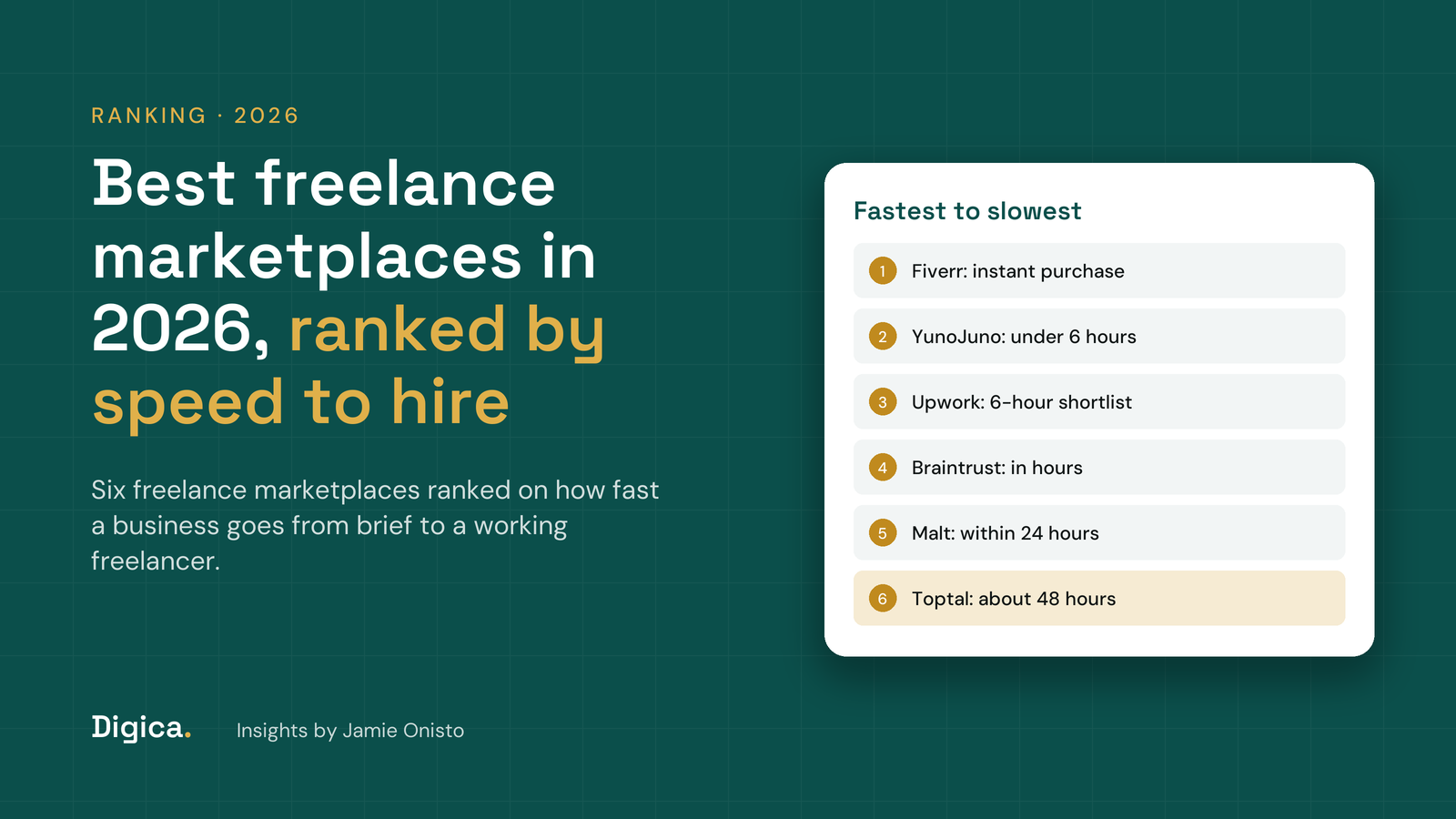
More than 72 million Americans now work independently, according to MBO Partners' 2025 State of Independence study, and most businesses that hire them start on a freelance marketplace. The question a hiring manager actually has is rarely "which platform is biggest". It is "how fast can someone good start work". On a freelance marketplace, that ranges from a purchase in minutes to a curated shortlist in about two days.
Speed and quality pull in opposite directions, and every freelance marketplace picks a point between them. An instant-buy B2B marketplace is fast because the buyer does the vetting. A curated network is slower because the platform does it. Open bidding sits in the middle and is often the slowest in practice, because the buyer has to read every proposal. The fastest platform on paper is not always the fastest route to a working freelancer.
This guide ranks six freelance marketplaces by speed to hire for a business buyer: the time each claims from brief to a freelancer at work, how its matching works and what protects you if the match is wrong. It uses different picks from our Upwork alternatives guide, which compared fees. Every speed figure is the platform's own claim, checked on October 15, 2026; none publishes an audited median time to hire.
Quick Navigation
- The ranking at a glance
- 1. Fiverr: fastest for a defined deliverable
- 2. YunoJuno: fastest from shortlist to contract
- 3. Upwork: a shortlist in six hours at volume
- 4. Braintrust: AI matching on a large network
- 5. Malt: a day to applications in Europe
- 6. Toptal: slowest here, with a paid trial safety net
- Instant buy, open bidding or curated match
- Three ways a fast hire turns slow
- How to choose a freelance marketplace by deadline
- The number for your next resourcing plan
- FAQ
- Related Articles
The ranking at a glance
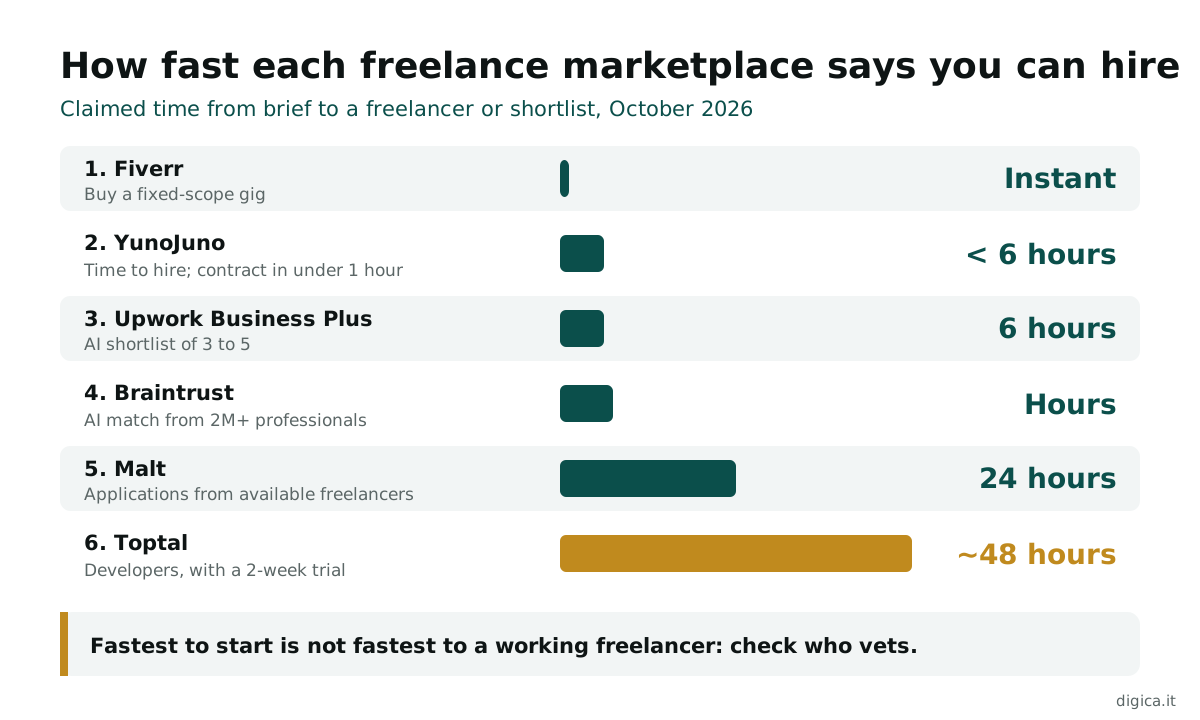
The short answer: Fiverr is the fastest freelance marketplace when the work fits a fixed-scope package, YunoJuno and Upwork claim a hire or shortlist within six hours, and Toptal is the slowest at about 48 hours but adds a trial you only pay for if you keep the freelancer.
Six freelance marketplaces ranked by claimed speed to hire, with matching model, scale and fit
| Rank | Freelance marketplace | Claimed speed | How matching works | Scale | Cost of a wrong match (risk) | Best for |
|---|---|---|---|---|---|---|
| 1 | Fiverr | Instant purchase of a fixed-scope gig | Buyer picks a package; Pro adds vetted talent | 3.1M annual active buyers, $342 average spend each | Buyer does the vetting; Pro money-back on eligible orders | Defined deliverables with a clear brief |
| 2 | YunoJuno | Time to hire under 6 hours; contract under 1 hour | Vetted marketplace inside a freelancer management system | Pays contractors in 165+ countries | Speed claim depends on a ready talent pool | Agencies and in-house teams hiring repeatedly |
| 3 | Upwork | AI shortlist within 6 hours on Business Plus | Open bidding plus an AI recruiter | 785,000 active clients, $4.03B gross services volume | Proposal review time if you skip the shortlist | Hiring at volume across many skills |
| 4 | Braintrust | AI matches candidates "in hours" | AI-matched vetted network | 2M+ vetted professionals in 100+ countries | No published trial or guarantee | Senior and technical roles |
| 5 | Malt | Applications within 24 hours | AI search, plus curated shortlists | 800,000+ freelancer profiles | Europe-centered supply | Hiring freelancers in Europe |
| 6 | Toptal | About 48 hours for developers | Curated match from a screened network | Fewer than 3% of 200,000+ yearly applicants accepted | Slowest start here | Senior hires where a wrong pick is costly |
Read the risk column next to the speed column. The two fastest options put more of the vetting on you; the slowest puts almost all of it on the platform, and backs that with a trial.
1. Fiverr: fastest for a defined deliverable
Fiverr is the fastest freelance marketplace in this ranking because there is nothing to wait for. A buyer purchases a fixed-scope service, called a gig, at a listed price, and work can start the same day. There are no proposals to read and no interviews to schedule.
The scale is large, though shrinking. Fiverr's full-year 2025 results reported 3.1 million annual active buyers at December 31, 2025, down 13.6% year over year, with average annual spend per buyer up to $342 and revenue of $430.9 million, up 10.1%. By the second quarter of 2026, active buyers had fallen to 2.7 million while spend per buyer rose to $368. Fewer, larger buyers is exactly the shift a platform makes when it moves upmarket.
Fiverr Pro is that move. It adds vetted freelancers, a paid sourcing service and project managers, and Fiverr says it gives a full money-back guarantee on eligible orders from managed services if cancellation is requested within 14 days of completion. The trade-off with the standard gig model is speed for structure: Pro sourcing takes longer than buying a package, but it removes most of the vetting.
Running a freelance marketplace and losing buyers before the first hire?
In 30 minutes we look at where buyers drop between brief and hire, and what would shorten it.
Speed has a condition. The instant-buy model only works when the work fits a package: a logo, a landing page, a set of ad creatives. For anything that needs scoping, a buyer ends up messaging several sellers before buying, and the speed advantage shrinks to hours.
The verdict: the fastest freelance marketplace for a well-defined deliverable. For open-ended work, use Fiverr Pro or one of the curated options below.
2. YunoJuno: fastest from shortlist to contract
YunoJuno makes the most specific speed claims of any freelance marketplace here, and they cover the steps most platforms leave out. Its homepage states a time to hire of under six hours, a time to contract of under one hour and a time to onboard a supplier of under one hour.
That second and third number matter more than they look. For a business, hiring a freelancer rarely stalls at finding them. It stalls at contracts, compliance checks and getting the freelancer set up as a supplier who can be paid. YunoJuno combines a vetted talent marketplace with a freelancer management system, so the contract and onboarding happen in the same place as the match, and it pays contractors in more than 165 countries.
The limit is that YunoJuno is built for teams that hire freelancers repeatedly, such as agencies, media companies and in-house creative teams. The speed comes from reusing an approved pool and standard paperwork. A company hiring one freelancer a year gets less of that benefit.
The verdict: the fastest route from "we found someone" to "they are working" for teams that hire freelancers every month.
3. Upwork: a shortlist in six hours at volume
Upwork is the largest freelance marketplace by spend. Its full-year 2025 results reported gross services volume of $4.03 billion, up 1%, revenue of $787.8 million and 785,000 active clients at December 31, 2025, with average spend of $5,129 per active client in the fourth quarter. By the second quarter of 2026, active clients stood at 763,000.
The default model is open bidding: post a job, receive proposals, interview and hire. That is flexible and often slow, because a popular job can draw dozens of proposals that someone has to read. Upwork's answer is its AI recruiter, Uma, which invites talent and surfaces the top three to five matches. Upwork's own hiring guide says it delivers a shortlist within six hours for Business Plus clients, the paid tier whose active clients grew 49% quarter over quarter in late 2025.
A large freelance workforce is behind that scale. The Upwork Research Institute found that more than one in four US skilled knowledge workers now freelance or work independently, together earning $1.5 trillion in 2024. For a business, that depth of supply is why a shortlist can arrive the same day for most common skills.
The verdict: the best freelance marketplace for hiring at volume across many skills. Use the Business Plus shortlist rather than open bidding if speed matters.
4. Braintrust: AI matching on a large network
Braintrust says its AI matches a business with ideal candidates in hours, from a network it describes as more than 2 million vetted professionals in over 100 countries. It also claims its AI recruiter, AIR, cuts time to hire by 80%.
Do businesses visit your freelance marketplace and never post a job?
A growth audit maps your landing pages, sign-up flow and first-hire journey, and where business buyers drop off.
Braintrust's appeal is senior and technical talent. The network leans toward engineering, product and design professionals, and its pitch to freelancers is that they keep what they earn. That supply-side choice is what lets it promise fast matches on roles that are slow to fill elsewhere.
Two caveats keep it at fourth. "In hours" is less specific than a stated six-hour or 48-hour figure, and Braintrust does not publish a trial or guarantee comparable to Toptal's. A business moving fast on a senior role is taking more of the risk of a wrong match on itself.
The verdict: a fast option for senior technical roles, best when you can assess candidates well yourself.
5. Malt: a day to applications in Europe
Malt is a freelance marketplace built around European freelancers. In a February 2025 interview, its chief technology officer said Malt matches clients with freelancers from more than 800,000 profiles on the platform, and that clients using its AI-assisted search start their projects faster.
Malt says businesses receive applications from qualified, available freelancers within 24 hours, and that freelancers typically respond within a day. For larger consulting needs, its Malt Strategy service says its team selects three candidates within 48 hours at most. That gives a buyer two speeds: self-serve search for common roles, and a curated shortlist for strategic ones.
The geographic fit is the real choice. Malt's supply is concentrated in Europe, which suits companies that need freelancers in European time zones, languages and employment rules. For a US-only search, a US-centered platform will usually produce more candidates.
The verdict: the best freelance marketplace for hiring in Europe, with a day to first applications and two days to a curated shortlist.
6. Toptal: slowest here, with a paid trial safety net
Toptal is the slowest freelance marketplace in this ranking and the one that does the most to make the wait worth it. It says businesses can typically hire developers through Toptal in about 48 hours, and that fewer than 3% of the more than 200,000 people who apply each year are accepted.
The trial is the reason a business accepts the wait. Toptal offers a trial period of up to two weeks, and if the client is not completely satisfied, it is not billed. Toptal reports a 98% trial-to-hire rate. In practice, that moves most of the cost of a wrong match from the buyer to the platform.
Speed is still competitive for the seniority on offer. Two days to a vetted senior developer is fast against a typical permanent hiring process, even if it is slow against a Fiverr purchase. The trade is clear: Toptal is slower to start and less likely to need restarting.
The verdict: the best freelance marketplace when a wrong hire is expensive. Pay for the wait, and use the trial.
Instant buy, open bidding or curated match
Every freelance marketplace in this ranking uses one of three matching models, and the model predicts speed better than the brand does.
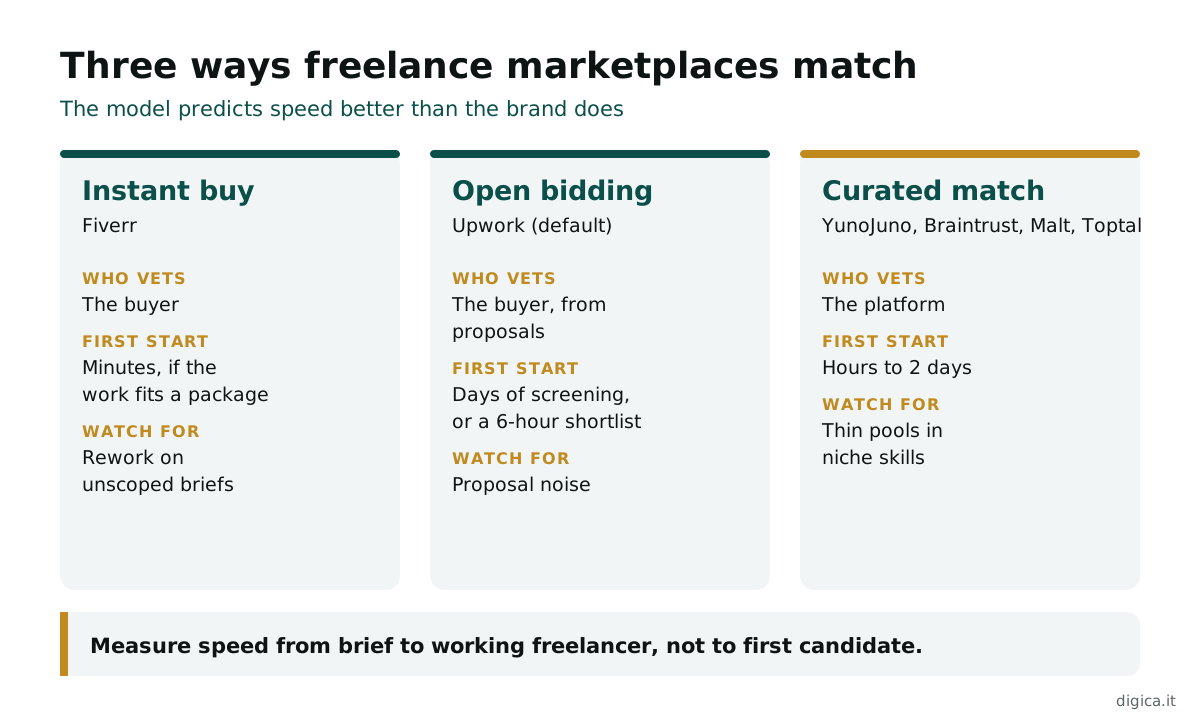
Instant buy (Fiverr) is fastest because the buyer chooses from fixed packages and does their own vetting. Open bidding (Upwork's default) is flexible but slow, because time goes into reading proposals and interviewing. Curated match (YunoJuno, Braintrust, Malt's shortlists, Toptal) is slower to the first candidate and faster to a working freelancer, because the platform has already screened the pool.
The supply side is moving upmarket too. MBO Partners counted a record 5.6 million US independents earning more than $100,000 a year in 2025, up 19% from 2024. The most experienced freelancers increasingly sit in curated pools, which is part of why those pools can match quickly on senior roles.
The model also shows where a platform's growth work is. An instant-buy marketplace grows by improving packages and search. An open-bidding marketplace grows by cutting proposal noise. A curated marketplace grows by adding vetted supply faster than buyers arrive. That last one is the liquidity problem every freelance marketplace eventually faces.
Three ways a fast hire turns slow
These patterns recur when businesses pick a freelance marketplace for speed and still wait weeks.
- Buying a package for unscoped work. A team buys a fixed gig for a project that needs discovery. The freelancer delivers exactly the package, the brief turns out to be wrong, and the work restarts. An hour saved at purchase becomes two weeks lost at revision.
- Posting an open job and reading every proposal. A hiring manager posts on an open-bidding marketplace, receives dozens of proposals and spends days screening them. The platform was fast; the process was not. A shortlist tier or a curated platform would have cut the screening.
- Matching fast, contracting slowly. A business finds the right freelancer in a day, then spends two weeks on contracts, supplier setup and compliance. This is the stall YunoJuno's under-one-hour contract and onboarding claims are designed to remove, and it is the one most hiring plans forget.
In each case the fix was the same: measure speed from brief to working freelancer, not from brief to first candidate.
How to choose a freelance marketplace by deadline
Work back from when the freelancer has to start, using these thresholds.
- If work must start today and fits a package, buy on Fiverr.
- If you hire freelancers every month and contracts slow you down, use YunoJuno.
- If you need a shortlist today across common skills, use Upwork Business Plus rather than open bidding.
- If the role is senior and technical and you can assess candidates yourself, try Braintrust.
- If you need freelancers in Europe within a day or two, use Malt.
- If a wrong hire would cost more than two days of delay, use Toptal and its trial.
Building a freelance marketplace that needs more business buyers?
We grow both sides of freelance and talent marketplaces, from the first buyers to repeat hiring.
For many businesses the answer is two platforms, not one: an instant-buy or open marketplace for small, defined tasks, and a curated network for roles where quality matters more than hours. Competition for good freelancers is rising. In its first-quarter 2026 survey of 750 US business leaders, the Upwork Research Institute found 70% plan to increase freelancer hiring, and among small and mid-size businesses, 71% planned to increase freelance hiring against 66% for full-time hiring. The freelancers you want will be booked faster next year than this one.
The number for your next resourcing plan
Every week a $20,000-a-month workstream waits for a freelancer is about $5,000 of planned output that does not ship. Choosing a freelance marketplace that starts work in hours rather than weeks can save $10,000 or more on a single delayed project. The biggest cost of doing nothing is a two-week contracting stall after the right freelancer was found in a day.
FAQ
What is a freelance marketplace? A freelance marketplace is a platform where businesses find, hire and pay independent professionals. Some sell fixed-scope packages, such as Fiverr; some run open bidding, such as Upwork; and some match buyers with a screened network, such as Toptal.
What is the best freelance marketplace for businesses? It depends on speed and risk. Fiverr is fastest for defined deliverables, Upwork for hiring at volume, Malt for Europe and Toptal for senior hires where a wrong pick is costly.
What is the fastest way to hire a freelancer? Buy a fixed-scope package on Fiverr when the work is well defined. For a shortlist, YunoJuno claims a time to hire under six hours, and Upwork says Business Plus clients get a shortlist within six hours.
How fast can you hire on Toptal? Toptal says businesses can typically hire developers in about 48 hours. It offers a trial of up to two weeks, and clients who are not completely satisfied are not billed.
Is Upwork or Fiverr better for businesses? Fiverr is better for fixed deliverables you can buy as a package. Upwork is better for scoped or ongoing work, with 785,000 active clients at the end of 2025 and an AI shortlist on its Business Plus tier.
What is the difference between a freelance marketplace and a freelance directory? A freelance directory lists profiles and leaves contracting and payment to you. A freelance marketplace handles matching, contracts and payment, which is what makes a fast hire possible.
How do freelance marketplaces vet freelancers? Curated platforms screen before listing: Toptal says fewer than 3% of applicants are accepted. Open marketplaces rely on reviews and job history, so the buyer does more of the vetting.
Related Articles
- Freelance marketplace growth
- Best talent marketplaces in 2026: who vets hardest
- Best Upwork alternatives in 2026, compared on fees
- The marketplace liquidity metric that compounds
- How to attract vendors to a B2B marketplace
This article is part of our B2B marketplace growth series. Browse more on the Digica blog.