The best Upwork alternatives in 2026 for hiring B2B talent, compared on fees
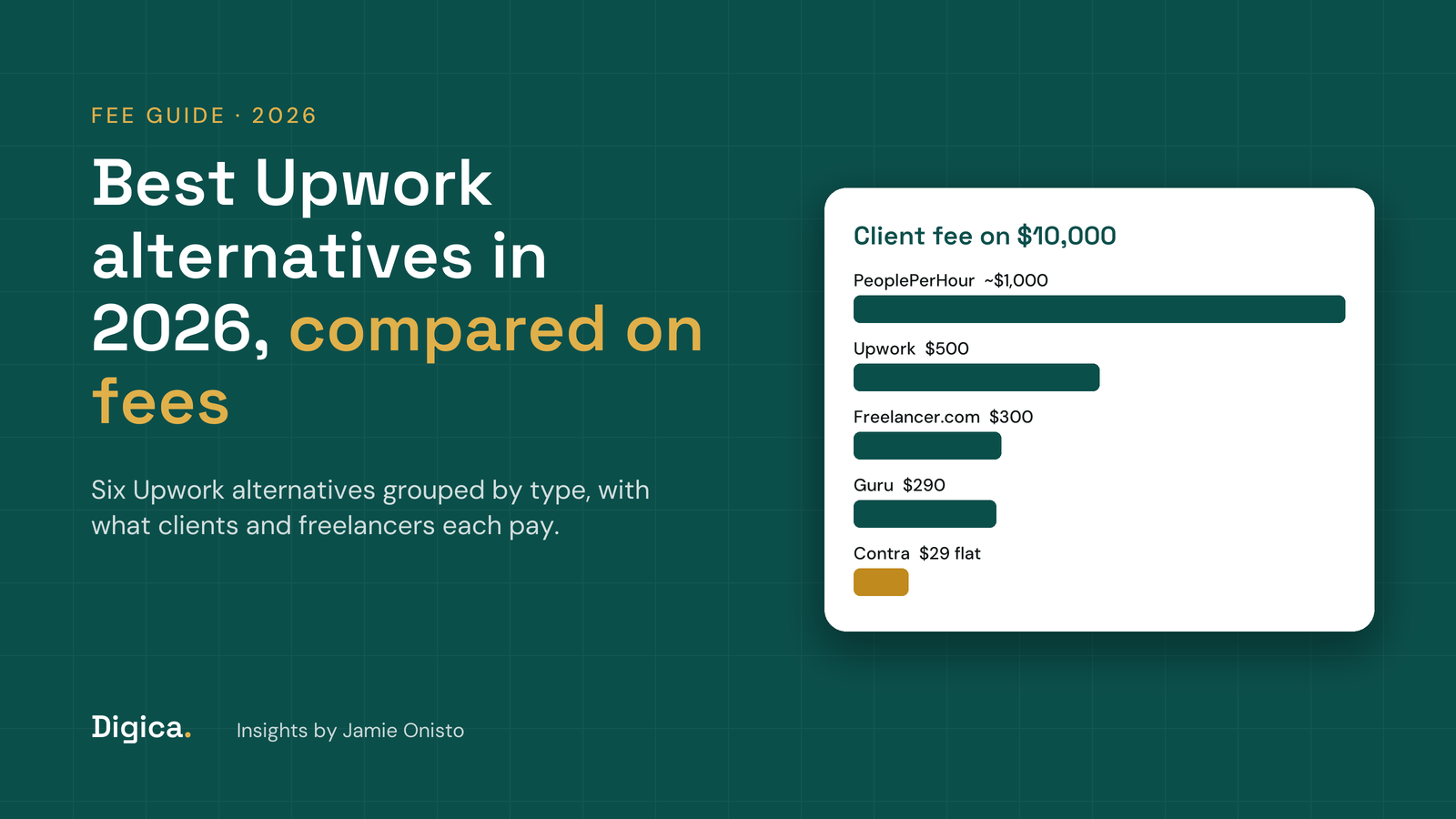
Most companies looking for an Upwork alternative are reacting to the bill. Upwork's 2025 annual report shows a marketplace take rate of 18.7% in 2025, up from 18.0% a year earlier, and since May 2025 freelancers pay a variable fee of 0% to 15% per contract on top of the client's own fee. On a $10,000 project, the platform's share is no longer a rounding error.
The cheapest-looking alternative is not always the cheapest. A platform that charges clients almost nothing may charge freelancers 20% on their first invoices, and freelancers price that in. A platform with no percentage fee at all may charge a flat fee per payment plus card processing. A vetted network may show no fee because it is built into the hourly rate. The headline percentage tells you where the fee is collected, not how much you pay.
So this guide groups six Upwork alternatives by type and compares them on what each side pays: the client fee, the freelancer fee and the extras such as bid credits and processing. Fees come from each platform's own fee pages, terms and filings, checked on October 13, 2026. It is a lens we know well from helping freelance and talent marketplaces set fees both sides will accept.
Quick Navigation
- What Upwork charges in 2026
- Upwork alternatives at a glance
- Open bidding marketplaces
- Zero-commission platforms: Contra
- Vetted developer networks: Lemon.io and Arc
- What a $10,000 project costs on each
- Where a low fee costs more
- Which Upwork alternative to choose
- The number to take to finance
- FAQ
- Related Articles
What Upwork charges in 2026
Upwork charges both sides, and it changed the freelancer side in 2025. That change is why so many companies now compare alternatives.
On the client side, Upwork's filing sets the marketplace fee at 5% of each transaction, or 3% for eligible clients paying by bank transfer through the automated clearing house (ACH). Business Plus clients pay 10%, or 8% by ACH, in exchange for a pre-vetted shortlist and other features. Upwork's help center adds a contract initiation fee of $0.99 to $14.99 on each new contract for clients outside Business Plus.
On the freelancer side, contracts formed since May 2025 carry a variable service fee of 0% to 15%, set by supply and demand factors such as project type and client demand, shown before the contract starts and fixed for its life. Contracts from before May 2025 keep the old flat 10%. Freelancers also buy Connects to submit proposals. Upwork reported 785,000 active clients at the end of 2025, down 6% on the year, so the fee debate is happening while its client base shrinks.
For a company hiring through Upwork, that adds up to three costs to compare against any alternative: the client fee you see on every invoice, the freelancer fee you do not see but pay for through higher quotes, and the time your team spends sorting proposals. The alternatives below win on different ones. None wins on all three, which is why grouping them by type is more useful than ranking them by headline fee.
Upwork alternatives at a glance
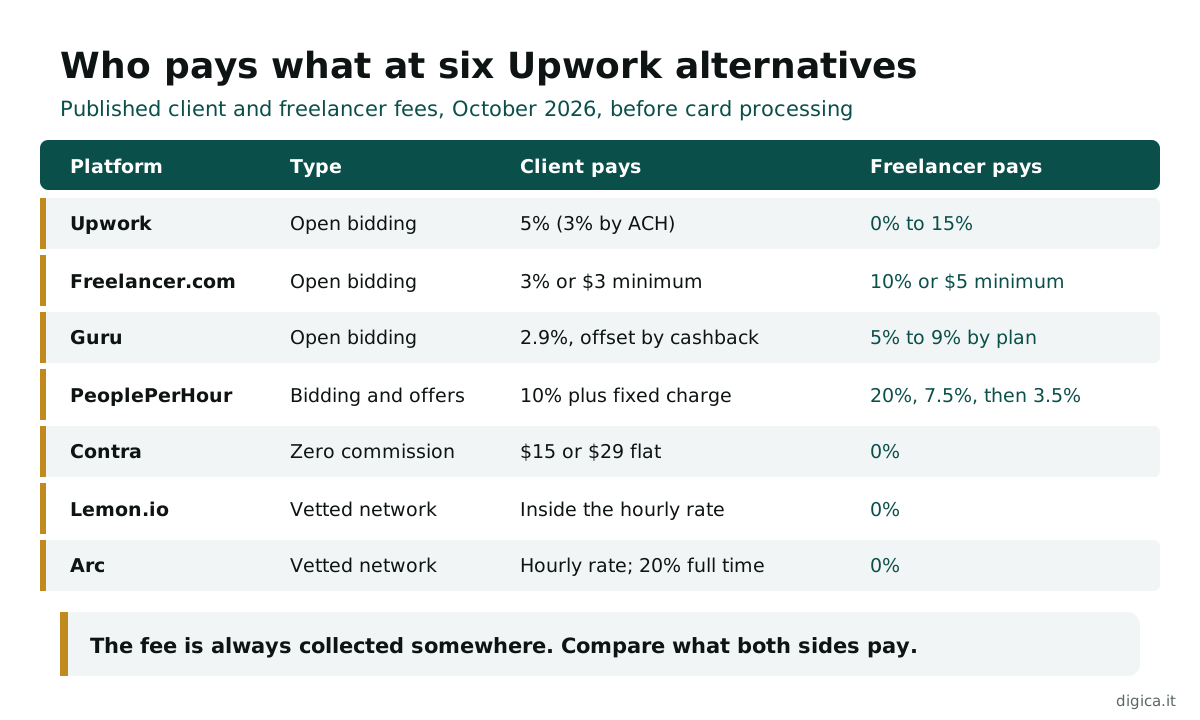
The short answer: Guru and Freelancer.com charge clients the least as a percentage, Contra charges freelancers nothing and clients a flat fee, and Lemon.io and Arc build their fee into the rate in exchange for vetting.
Six Upwork alternatives compared on client fees, freelancer fees, vetting and fit
| Upwork alternative | Type | Client pays | Freelancer pays | Vetting | Main risk | Best for |
|---|---|---|---|---|---|---|
| Freelancer.com | Open bidding | 3% or $3, whichever is greater, plus deposit fees | 10% or $5; 15% on curated projects | None by default | 54 bids per project to sift | Small, well-defined projects |
| Guru | Open bidding | 2.9% handling fee, offset by 3% cashback on eCheck or wire | 5% to 9% by membership plan | None by default | Fewer buyers and less activity | Ongoing work at the lowest client fee |
| PeoplePerHour | Open bidding and fixed offers | 10% plus a small fixed charge per payment | 20%, then 7.5%, then 3.5% as billing grows | Applications reviewed | Highest client fee in the set | UK and EU creative and marketing work |
| Contra | Zero commission | $15 per payment under $500, $29 over; $0 if the freelancer has Pro | 0% commission | None by default | Card processing still applies | Design, creative and brand work |
| Lemon.io | Vetted developers | One all-in hourly rate; 160-hour minimum | 0% | 1.2% of applicants accepted | Commission hidden in the rate | Startups hiring developers fast |
| Arc | Vetted developers | Freelancer's hourly rate; 20% of salary for full-time hires | 0% | Communication and technical tests | Placement fee on full-time hires | Remote developers, freelance or full time |
Running a talent marketplace and rethinking your take rate?
In 30 minutes we look at your fees on both sides, and what they do to supply, demand and repeat hiring.
Read the client column with the freelancer column beside it. A freelancer who pays 20% on a first invoice and one who pays nothing will not quote you the same rate for the same work. On a long engagement, the fee each side pays tends to end up in the price. The cheapest Upwork alternative for a client is usually the one where the total of both fees is lowest, not the one with the lowest client fee, and that total is what the table lets you estimate before you post a project.
Open bidding marketplaces
Open bidding marketplaces work like Upwork: you post a project, freelancers bid and you choose. They are the closest like-for-like Upwork alternatives, and the cheapest for clients as a percentage.
Freelancer.com
Freelancer.com is the largest open bidding marketplace outside Upwork. Its 2025 annual report counts 87.5 million registered users and 25.3 million jobs posted since launch, an average project size of $413 and an average of 54 bids per project. AI-related jobs now make up around 5% of marketplace volume, which the company describes as still early.
Clients pay 3% or $3, whichever is greater, on fixed-price projects and 3% on hourly ones, plus a deposit fee of 2.3% and $0.30 on card or PayPal payments; local bank deposits are free. Freelancers pay 10% or $5, rising to 15% on curated Recruiter projects, and can buy bid plans from $4.99 to $99 a month.
Guru
Guru has run since 1998 and charges clients the least on this list. Its help center sets a 2.9% handling fee on invoices, and paying by eCheck, check or wire earns a 3% cashback that it says effectively reduces the fee to zero. Posting and searching are free.
Freelancers pay a job fee of 9% on the free plan, falling to 5% on the Executive plan at $49.95 a month, and clients can choose to contribute up to 5% toward a freelancer's fee. Guru publishes no dated 2025 or 2026 activity figures, so judge its talent pool by searching your category before you commit.
PeoplePerHour
PeoplePerHour, founded in 2007 and based in the UK, says it has connected more than 1 million clients and freelancers. It is the expensive option for clients: its terms, updated in September 2026, set a buyer service fee of 10% plus a small fixed charge on each payment, double Upwork's standard 5%.
Is your fee structure costing you your best freelancers?
A growth audit maps your take rate, supply churn and repeat hiring against what each match earns you.
Freelancers pay on a sliding scale per client: 20% on the first tier of billing with each client, then 7.5%, then 3.5% as lifetime billing with that client grows. That rewards long relationships, which suits clients who plan to rehire the same freelancer. Freelancers get 15 free proposal credits a month and can buy more. PeoplePerHour also sells fixed-price Offers, packaged services with a set scope and price, which make it closer to Fiverr than to Upwork for small, repeatable jobs such as a logo or a landing page.
Zero-commission platforms: Contra
Contra takes no commission from freelancers, and it says freelancers on Contra have earned more than $250 million across more than 1.5 million creative experts. It is the main Upwork alternative for design, creative and brand work.
Clients pay a flat platform fee per payment instead of a percentage: $15 on payments under $500 and $29 on payments over $500, dropping to $0 when the freelancer pays for Contra Pro at $29 a month. Card payments carry processing of 2.9% plus 30 cents, while ACH costs 0.8% capped at $5. In March 2026 Contra launched Contra Labs, an evaluation lab for creative AI work built on its freelancer network.
On large invoices the flat fee is the cheapest structure on this list, but only if you pay by bank transfer. Pay a $10,000 invoice by card and processing adds about $290, close to Freelancer.com's 3% client fee.
Vetted developer networks: Lemon.io and Arc
Lemon.io and Arc do not charge freelancers at all, and they do not add a visible client fee either. They earn their margin inside the rate, in exchange for doing the screening that open marketplaces leave to you.
Lemon.io sells developer hours on a prepaid basis, with one all-in hourly rate that includes its commission, no upfront recruitment fees and a minimum of 160 hours. It says it accepts 1.2% of applicants and matches clients in about 24 hours. Arc charges clients the freelancer's hourly rate, from $15 to more than $110, for hours actually worked, takes 20% of annual salary when you hire full time, and offers a risk-free trial of up to two weeks. It says its network spans 450,000 people in 190 countries and that its talent has passed communication and technical assessments.
The trade-off is transparency. With an open marketplace you can see the fee. With a vetted network you are paying for the vetting, and the only way to judge the price is to compare the final hourly rate with what you would pay for the same seniority elsewhere. Our guide to the best talent marketplaces judged on vetting covers how hard each network screens.
What a $10,000 project costs on each
The cleanest comparison is a single $10,000 fixed-price project, using each platform's published client fee before card processing.
- PeoplePerHour: 10% plus the fixed charge, about $1,000.
- Upwork Business Plus: 10%, or $1,000; 8% by ACH.
- Upwork standard: 5%, or $500, plus up to $14.99 to start the contract; $300 by ACH.
- Freelancer.com: 3%, or $300, plus deposit fees of 2.3% and $0.30 if you pay by card.
- Guru: 2.9%, or $290, and roughly zero if you pay by eCheck or wire.
- Contra: a flat $29, or nothing if the freelancer has Pro, plus processing.
The freelancer side matters as much. On the same project a freelancer keeps $10,000 on Contra, Lemon.io or Arc, about $9,000 on Freelancer.com and between $9,100 and $9,500 on Guru, depending on their plan. On Upwork it depends on the variable fee for that contract, anywhere from $8,500 to $10,000. A freelancer who keeps more can quote less, and the best freelancers know exactly which platform pays them most.
Hourly work changes the picture only slightly. Upwork, Freelancer.com and Guru apply the same percentages to each weekly invoice, so the share stays the same however long the contract runs. Contra's flat fee is charged per payment, so it favors fewer, larger invoices: paying monthly rather than weekly cuts the platform fee by roughly three quarters. PeoplePerHour moves the other way, because the freelancer's fee falls as billing with you grows. Lemon.io's 160-hour minimum means the smallest engagement is one full-time month of a developer's time, which rules it out for a quick fix but suits a defined build. Before choosing, write down how often you will pay and how long the work will run. Those two numbers decide the cheapest platform more often than the headline fee does.
Where a low fee costs more
A low fee only lowers the total cost if the rest of the hire goes well. Three patterns erase the saving.
- The 54-proposal problem. On an open bidding marketplace with dozens of bids per project, the cost moves from the fee to your time. If reading proposals and running interviews takes a manager eight hours, that time can cost more than the fee difference between platforms on a small project.
- The card payment. Contra's flat fee looks unbeatable until the invoice is paid by card. On large invoices, set up bank transfer before the first payment, or the processing charge cancels most of the saving.
- The rehire at full fee. On PeoplePerHour the freelancer's fee falls as billing with you grows, so moving a proven freelancer to a new platform resets their fee to the highest tier, and they will want to price that in.
For marketplace founders, each pattern is a pricing decision in disguise. Our guide to marketplace business models shows how commission, subscription and flat-fee models change who stays on the platform as it grows.
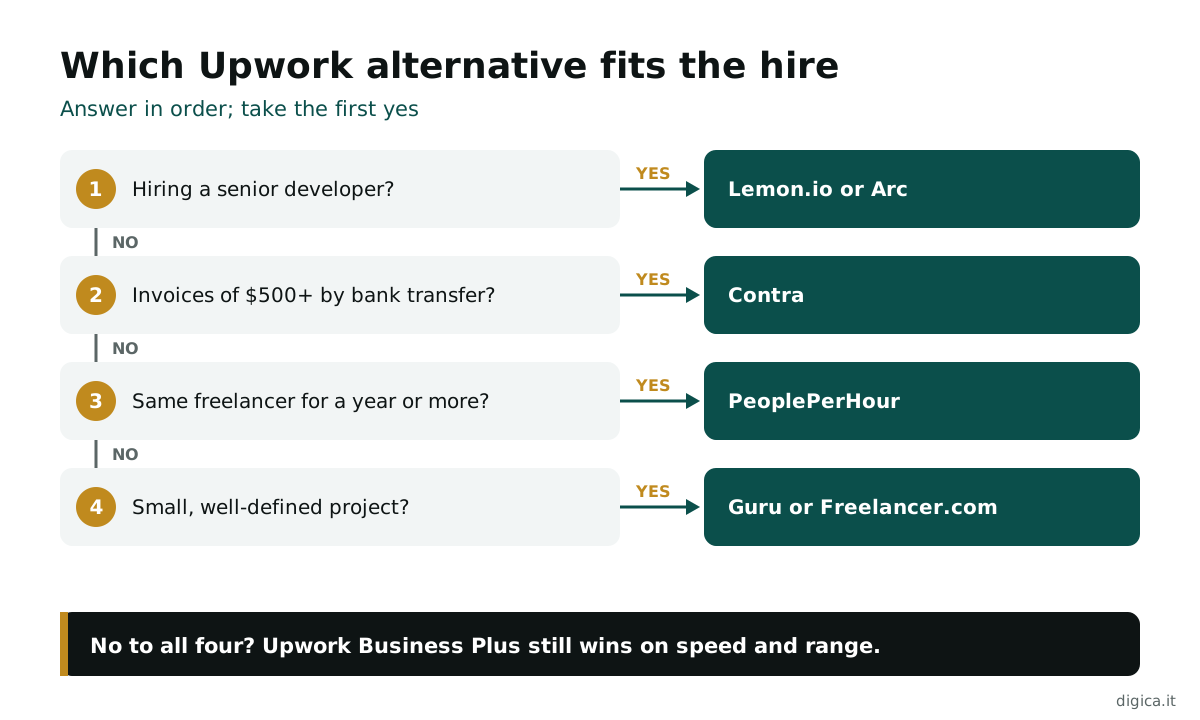
Which Upwork alternative to choose
Choose by project size, payment method and how much screening you want to do yourself.
- If the project is under $1,000 and well defined, Freelancer.com or Guru gives the lowest client fee. Budget time to screen bids.
- If you hire senior developers and cannot afford a miss, use Lemon.io or Arc, and compare the final hourly rate, not the fee.
- If you pay creative freelancers $500 or more per invoice by bank transfer, Contra's flat fee is the cheapest structure available.
- If you will work with the same freelancer for a year or more, PeoplePerHour's sliding freelancer fee rewards the relationship, despite its client fee.
- If you need volume across many categories and a shortlist in hours, Upwork Business Plus may still be worth its 10%.
Building a freelance marketplace with a fee both sides accept?
We grow supply, demand and repeat hiring for freelance and talent marketplaces.
Whatever you choose, run the same project through two platforms before moving all your hiring. Fees are published, but the quality of the bids you receive is not, and that is what decides whether a cheaper platform is actually cheaper. The International Labour Organization counted at least 136 active freelance platforms worldwide as of October 2025, so there is always another option to test.
The number to take to finance
If your company spends $200,000 a year on freelancers through Upwork's standard plan, the client fee alone is $10,000 a year, or $6,000 by ACH. The same spend at Guru's 2.9% handling fee is $5,800 before the bank-transfer cashback, and on Contra it is $29 per payment, so 100 invoices a year cost $2,900 in platform fees. The biggest cost of doing nothing is not the fee, though: it is losing freelancers who keep more of their rate somewhere else.
FAQ
What is the best alternative to Upwork? It depends on the work. Freelancer.com and Guru are the closest open bidding alternatives with lower client fees, Contra suits creative work with zero freelancer commission, and Lemon.io and Arc suit hiring vetted developers.
Which freelance platform has the lowest fees? For clients, Guru charges a 2.9% handling fee that a 3% cashback on eCheck or wire payments can cancel out, and Contra charges a flat $15 or $29 per payment. For freelancers, Contra, Lemon.io and Arc charge no commission.
How much does Upwork charge clients in 2026? Upwork charges clients a 5% marketplace fee, or 3% by ACH, plus a contract initiation fee of $0.99 to $14.99. Business Plus clients pay 10%, or 8% by ACH.
How much does Upwork charge freelancers? Since May 2025, a variable fee of 0% to 15% per contract, shown before the contract starts. Contracts formed before May 2025 keep a flat 10%. Freelancers also pay for Connects to submit proposals.
Is Fiverr an alternative to Upwork? Fiverr is an alternative for packaged services with a fixed scope rather than open bidding on custom projects. We compare Fiverr Pro with other vetted platforms in our guide to the best talent marketplaces.
Are vetted developer networks more expensive than Upwork? Not always. Lemon.io and Arc add no visible fee and charge freelancers nothing, but their margin sits inside the hourly rate. Compare the final rate for the same seniority, not the fee.
Related Articles
- Freelance marketplace growth
- Best talent marketplaces in 2026: who vets hardest
- Marketplace business models: how B2B platforms make money
- How to attract vendors to a B2B marketplace
- The marketplace liquidity metric that compounds
This article is part of our B2B marketplace growth series. Browse more on the Digica blog.